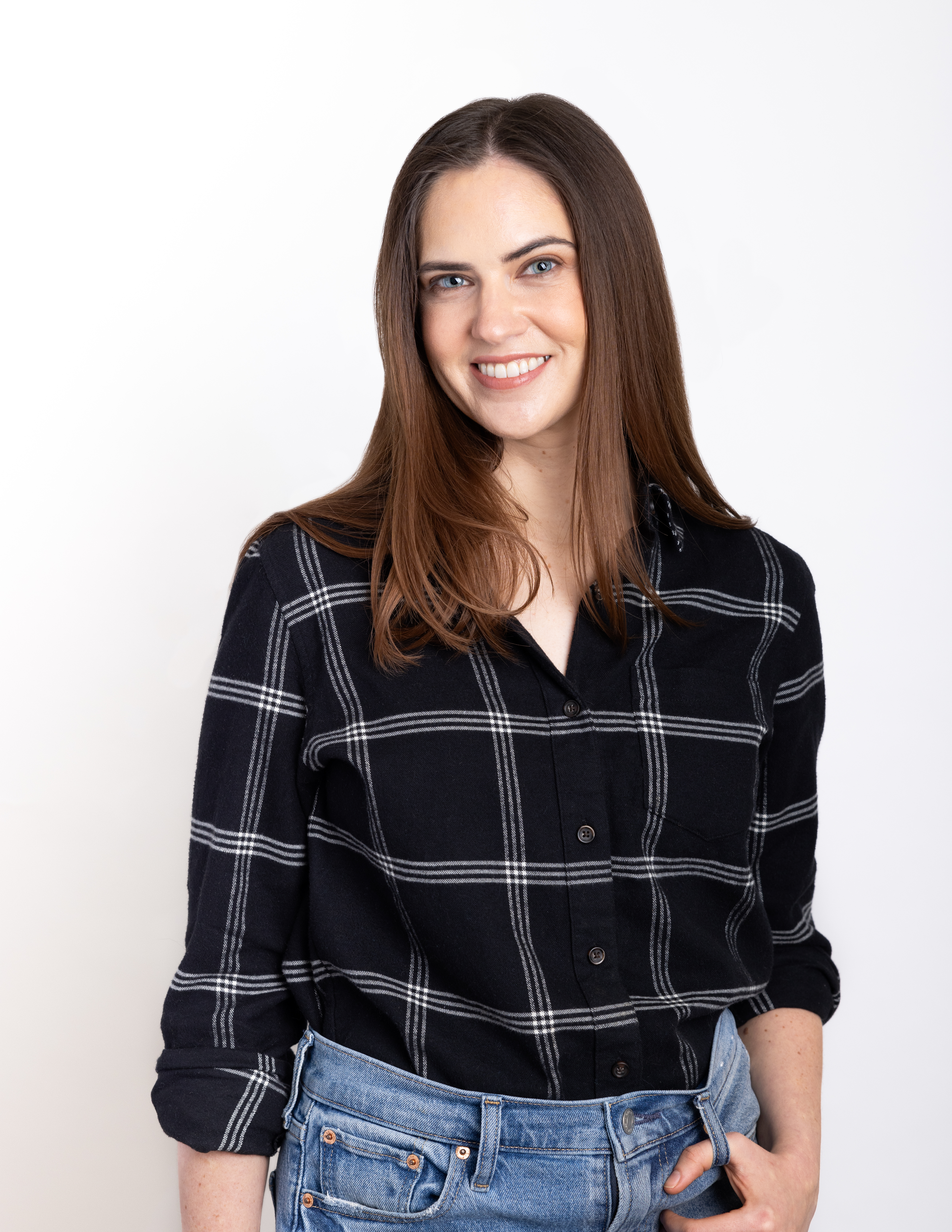
About me
I'm a lecturer and researcher at the University of Michigan School of Information. I study how scientists program with generative AI programming tools. I also serve as the director of the Graduate Data Science Certificate program at the Michigan Institute for Data, AI and Society. My research is generously supported by the Alfred P. Sloan Foundation's Digital Technology Fund and Schmidt Sciences.
Select papers
Full publication list can be found on Google Scholar.
O’Brien, G., Milewicz, R., & Eisty, N. (2026). How researchers use and verify AI coding assistants: tasks and validation practices in scientific programming. arXiv pre-print.
O’Brien, G. (2026). Who is scientific code for? Maintaining human-readable landmarks in agent-written code. Position piece at the Infrastructure workshop at the ACM Conference on Computer-Supported Cooperative Work and Social Computing (CSCW 2026).
O’Brien, G., & Eisty, N. (2026). Scientific software in the age of vibe coding. Computing in Science & Engineering, 28(1), 112-116.
Smite, D., Wivestad, V.T., O’Brien, G., Santos, I., Destefanis, G., Baldassarre, M.T., Lungu, M., Paja, E., & de Souza Santos, R. (2026). Beyond individual prompting efficiency: a socio-technical perspective on computational waste in AI-assisted software engineering. To appear in the Emerging Results, Vision, and Reflection Papers track at the ACM/IEEE International Symposium on Empirical Software Engineering and Measurement (ESEM 2026).
O’Brien, G., Santos Alves A.P., Baltes, S., Liebel, G., Lungu, M., & Kalinowski, M. (2026). User misconceptions of LLM-based conversational programming assistants. In the Journal Ahead Workshop (JAWs 2026) at the IEEE/ACM International Conference on Software Engineering (ICSE 2026).
O’Brien, G., Parker, A., Eisty, N., & Carver, J. (2025). A survey of generative AI adoption and perceived productivity among scientists who program. arXiv pre-print.
O’Brien, G. (2025). Threats to scientific software from over-reliance on AI code assistants. Nature Computational Science, 1-3.
O’Brien, G. (2025). How scientists use large language models to program. In Proceedings of the 2025 CHI Conference on Human Factors in Computing Systems (pp. 1-16).
O’Brien, E., & Mick, J. (2024). In the academy, data science is lonely: barriers to adopting data science methods for scientific research. Harvard Data Science Review, 6(2).
O’Brien, G., Ganjigunta, R., & Dhillon, P. S. (2024). Wellness influencer responses to COVID-19 vaccines on social media: a longitudinal observational study. Journal of Medical Internet Research, 26, e56651.
In the news
Can AI help scientists write code they can trust? University of Michigan School of Information News, June 2026.
Fake authors, real citations: scientists discovered a preprint plagiarism network. The Scientist, March 2026.
How scientists learn computing and use LLMs to program. Computing Ed Research (Mark Guzdial’s blog), March 2025.
The surreal comedy bot that’s turning AI into LOL. Wired, 2017.
Work with me
I am sometimes able to take on research assistants. If you are interested, please send an email with a link to your GitHub, a copy of your resume and a few sentences about yourself. I welcome imperfect writing.